

Can Liposuction Remove Belly Fat Permanently?
When it comes to body contouring, one of the most common questions patients ask is surprisingly simple: if liposuction removes belly fat, can that fat ever come back? The answer requires a little more explanation than a simple yes or no.
At DesignerBodyz, Dr. Parag Telang, a leading plastic and cosmetic surgeon in Mumbai, approaches liposuction as a contouring procedure rather than a shortcut to weight loss. The objective is to identify localised fat deposits that are resistant to diet and exercise, remove them in a controlled manner and create a body contour that remains proportionate to the rest of the patient's frame.
But what happens to the fat cells once they are removed? Are they gone permanently? Can the stomach become fat again after liposuction? And does maintaining your weight really make a difference?
These questions are particularly important because liposuction permanently removes fat cells from the treated area, but it does not make future weight gain impossible. Understanding what the procedure can—and cannot—do is essential before considering it.
What Exactly Does Liposuction Do to Belly Fat?
Liposuction removes subcutaneous fat, the soft layer of fat located beneath the skin.
During the procedure, a thin tube called a cannula is inserted through small incisions and used to suction out targeted fat deposits. Because the procedure physically removes fat cells from the treated area, the reduction in those cells is considered permanent.
This can be particularly useful for people who have localised abdominal fat that has remained despite maintaining a relatively stable weight and following healthy lifestyle habits.
However, liposuction does not remove every fat cell from the abdomen. It reduces the number of cells in the treated area while preserving enough tissue for a healthy and natural contour.
Does That Mean Belly Fat Can Never Come Back?
Not exactly.
This is where the word "permanent" can be misleading.
The fat cells removed during liposuction do not simply grow back. But the fat cells that remain can become larger if you gain weight. Significant weight gain can therefore change the appearance of the treated abdomen over time.
In other words:
Liposuction permanently removes fat cells. It does not permanently prevent fat accumulation.
If your weight remains relatively stable after surgery, the improved contour can last for many years.
What Happens If You Gain Weight After Liposuction?
Suppose you have liposuction on your abdomen and later gain weight.
The remaining fat cells throughout your body can enlarge. You may therefore notice increased fullness again, although the distribution of fat may not be exactly the same as it was before surgery.
The treated area has fewer fat cells than it originally did, so the body may not regain exactly the same proportions. However, substantial weight gain can still significantly affect your results.
This is why maintaining a relatively stable weight is one of the most important factors in preserving the outcome.
Can Liposuction Remove All Types of Belly Fat?
No, this is one of the most important things to understand before considering the procedure.
There are two broad types of abdominal fat:
Subcutaneous Fat
This is the fat located underneath the skin. It is the soft, pinchable fat that can contribute to love handles, lower-abdominal fullness and other visible body-contouring concerns.
This is the type of fat liposuction can target.
Visceral Fat
Visceral fat is located deeper inside the abdominal cavity, around internal organs. It contributes to a protruding abdomen but cannot be removed through cosmetic liposuction.
Reducing visceral fat requires broader lifestyle and medical strategies, including appropriate nutrition, physical activity and weight management.
So if the abdomen protrudes primarily because of visceral fat, liposuction is not the solution.
Who Is a Good Candidate for Abdominal Liposuction?
Liposuction may be considered when a person has localised abdominal fat with relatively good skin elasticity.
Typical candidates may:
- Be relatively close to their healthy or stable weight
- Have stubborn abdominal or flank fat
- Have good or reasonably good skin elasticity
- Be in generally good health
- Have realistic expectations
- Understand that liposuction is not a weight-loss procedure
- Be prepared to maintain a stable lifestyle afterwards
Mayo Clinic notes that liposuction is generally more appropriate for people with specific areas of excess fat who otherwise have a stable body weight.
Can Liposuction Treat Belly Fat After Pregnancy?
Pregnancy can change the abdomen in several ways. There may be increased fat, stretched skin and abdominal-wall changes.
If the primary issue is a localised fat deposit and the skin has retained good elasticity, liposuction may be an option.
If there is significant loose skin or abdominal-wall laxity, a tummy tuck may be more appropriate.
This is why the same procedure should not automatically be recommended to every person with post-pregnancy abdominal changes.
Can Exercise Give the Same Result as Liposuction?
Exercise and nutrition remain fundamental for reducing overall body fat and improving health.
However, they cannot selectively remove fat from one specific area. You can strengthen the abdominal muscles, improve your overall body composition and reduce total body fat, but your genetics determine to a large extent where your body loses fat first and where stubborn deposits remain.
Liposuction works differently: it physically removes selected subcutaneous fat deposits.
That makes the two approaches complementary rather than interchangeable.
What Happens During Abdominal Liposuction?
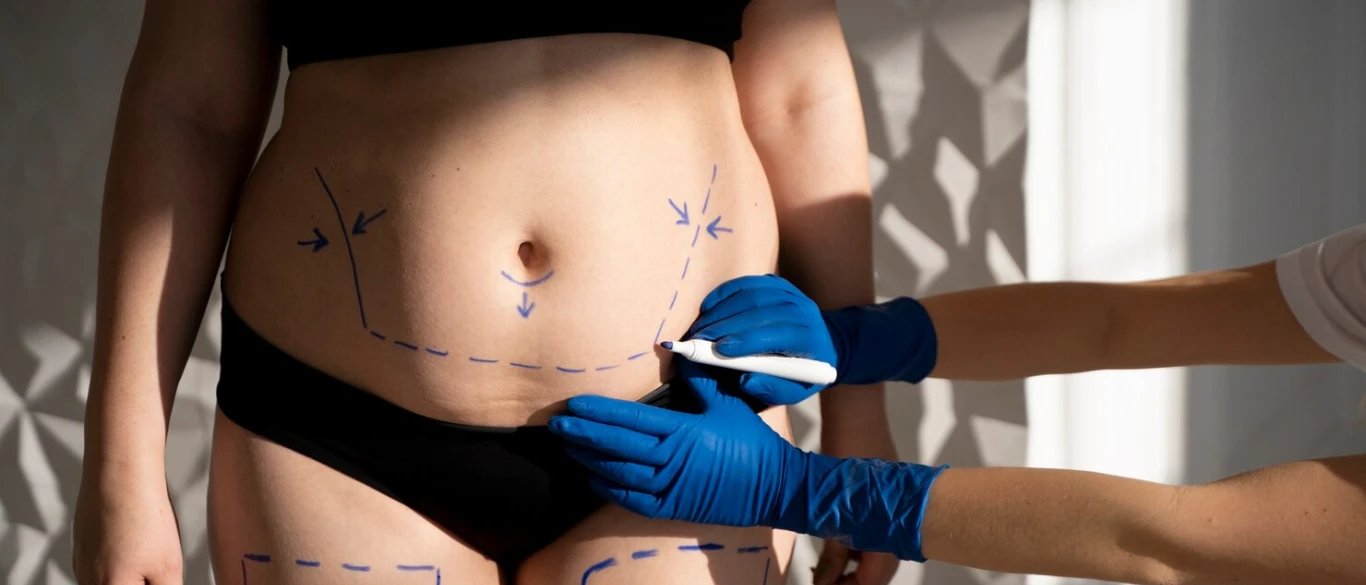
The procedure begins with marking the areas to be treated and planning the desired contour.
Small incisions are made and a cannula is inserted into the fatty layer. The surgeon then removes targeted fat in a controlled manner, taking into account symmetry, body proportions and the skin's ability to adapt to the new contour.
Depending on the patient's anatomy and the treatment plan, liposuction may also address areas such as the flanks or waist to create a more balanced abdominal contour.
The aim is not simply to remove the maximum possible amount of fat. Good liposuction is about controlled contouring.
How Long Do Liposuction Results Last?
The results can be long-lasting because the fat cells removed from the treated area are permanently eliminated.
But long-lasting does not mean unaffected by future body changes.
Ageing, pregnancy and significant changes in body weight can all alter your shape. Maintaining a stable weight, eating a balanced diet and staying physically active can help preserve the contour achieved through surgery.
Liposuction at DesignerBodyz
When considering abdominal liposuction, the procedure should be planned around the patient's overall body shape rather than treating the abdomen as an isolated area.
At DesignerBodyz, Dr. Parag Telang, a leading plastic and cosmetic surgeon in Mumbai, evaluates factors such as fat distribution, skin quality, body proportions and the patient's desired outcome before recommending a body-contouring approach.
For some patients, abdominal liposuction may be sufficient. For others, additional areas such as the flanks may need to be addressed, while patients with significant loose skin may need a different or combined procedure.
The consultation is therefore about more than asking how much fat can be removed. It is about understanding what is creating the abdominal contour in the first place.
How Can You Maintain Your Liposuction Results?
There is no special diet that can "protect" the treated fat cells. The basic principles are the same ones that support healthy weight management generally.
After recovery:
- Maintain a relatively stable weight.
- Follow a balanced diet.
- Stay physically active.
- Include regular strength and cardiovascular exercise as appropriate.
- Avoid repeated cycles of major weight gain and loss.
- Follow your surgeon's post-operative instructions.
The goal is not to spend the rest of your life trying to avoid gaining even a kilogram. Normal fluctuations happen. The concern is significant or sustained weight gain, which can change the overall body contour.
Final Takeaway
So, can liposuction remove belly fat permanently?
Yes, but with an important qualification.
The fat cells physically removed through liposuction do not simply grow back. What can change is the size of the fat cells that remain. Significant weight gain can therefore bring back abdominal fullness or alter fat distribution, even though the original removed cells are gone.
And that is why the best liposuction results are not really about chasing a smaller number on the weighing scale. They are about treating the right kind of fat in the right patient.
If the problem is stubborn subcutaneous belly fat and your weight is relatively stable, liposuction may help create a slimmer, more defined abdominal contour. If the issue involves significant loose skin, muscle separation or visceral fat, another approach may be needed.
A consultation with a qualified plastic surgeon can help determine whether the fullness you're trying to change is actually suitable for liposuction and what kind of result the procedure can realistically provide.
FAQs About Liposuction Remove Belly Fat
Is belly fat permanently removed with liposuction?
The fat cells removed during liposuction are permanently removed. However, the remaining fat cells can enlarge with weight gain, so the overall abdominal contour can change in the future.
Can you gain belly fat again after liposuction?
Yes. Liposuction does not prevent future weight gain. Significant weight gain can increase fat storage in the body and affect the treated area's appearance.
Does liposuction remove visceral belly fat?
No. Liposuction targets subcutaneous fat beneath the skin. It cannot remove visceral fat surrounding the abdominal organs.
Is liposuction a substitute for losing weight?
No. Liposuction is a body-contouring procedure, not a treatment for overall weight loss. It is generally intended for people with localised fat deposits who are already relatively stable in weight.
Will my stomach become loose after liposuction?
It depends largely on skin quality and elasticity. Skin with good elasticity can generally adapt better to the reduced volume. If the skin is significantly loose or has poor elasticity, liposuction alone may not provide the desired contour and a skin-removal procedure may need to be considered.
How can I maintain my liposuction results?
Maintaining a relatively stable weight through balanced nutrition and regular physical activity is the most important factor. Significant weight fluctuations can alter the body's contours even after successful liposuction.
About the Author


