

Thigh Liposuction: Procedure, Benefits, Cost & Side Effects
Stubborn fat around the thighs can persist despite regular exercise and a balanced diet. It may collect around the inner thighs, outer thighs or the area commonly known as saddlebags, affecting the overall proportions of the lower body. While lifestyle changes can reduce body fat, they cannot determine exactly where fat is lost.
Thigh liposuction is a cosmetic surgical procedure designed to remove localised fat deposits and refine thigh contours. At DesignerBodyz in Mumbai, Dr. Parag Telang - plastic surgeon in Mumbai, helps patients understand whether liposuction is suitable for their body type, skin quality and desired outcome. This guide covers how thigh liposuction in Mumbai is performed, its benefits, approximate cost and potential side effects, along with the precautions that can help make the procedure safer.
What Is Thigh Liposuction?
Thigh liposuction involves removing excess fat from selected areas of the thighs using a thin tube called a cannula. The cannula is inserted through small incisions and connected to a suction device that removes fat beneath the skin.
Depending on individual needs, the procedure may target the inner thighs, outer thighs, front or back of the thighs, or fat around the knees. The treatment plan depends on fat distribution, skin elasticity and the overall shape of the lower body.
How Is Thigh Liposuction Performed?
The procedure varies according to the amount of fat being removed, the treatment area and the technique selected by the surgeon. It generally involves these steps.
Step 1: Consultation and Assessment
The surgeon examines the thighs, evaluates skin elasticity and reviews the patient's medical history, medications and previous surgeries. This assessment helps determine whether liposuction can address the concern or whether another treatment would be more appropriate.
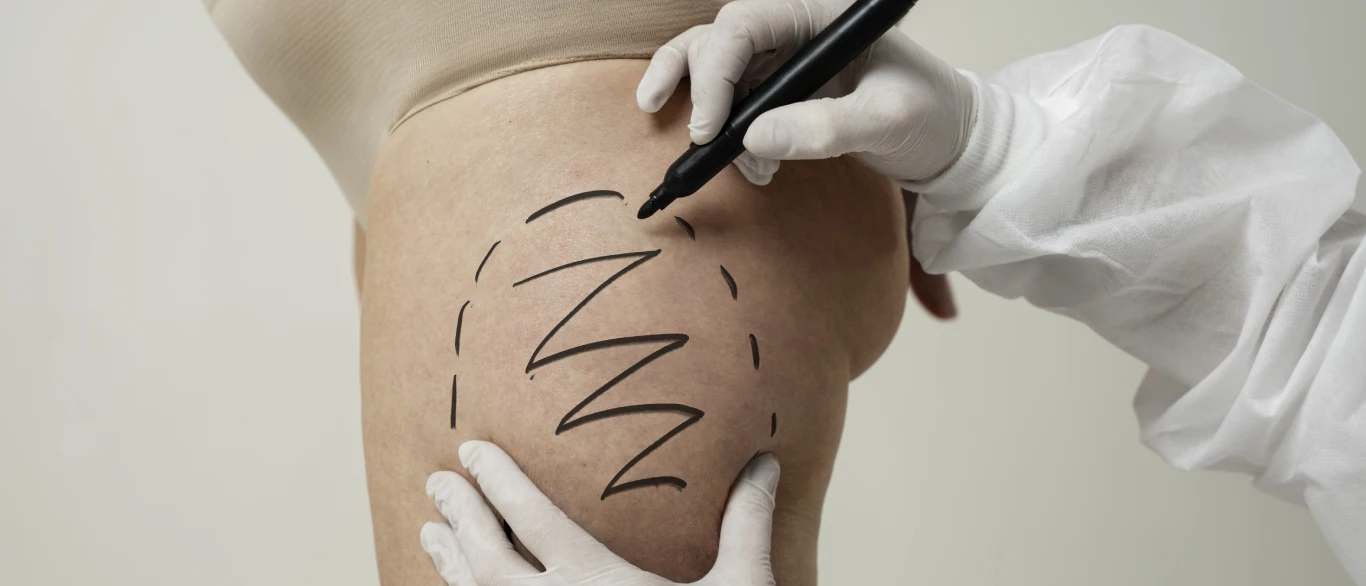
Step 2: Marking the Treatment Areas
The surgeon marks the areas where fat will be removed. These markings guide the procedure and help maintain balanced contours between the thighs.
Step 3: Anaesthesia
Anaesthesia is administered according to the extent of surgery and the patient's requirements. The options may include local anaesthesia with sedation or general anaesthesia.
Step 4: Making Small Incisions
Small incisions are created at selected points around the treatment area. These openings allow the cannula to reach the underlying fat while keeping the incision size limited.
Step 5: Removing the Targeted Fat
The surgeon inserts the cannula and carefully removes the planned amount of fat. In tumescent liposuction, a fluid containing saline, local anaesthetic and medication to reduce bleeding is introduced into the area before fat removal.
The surgeon works to achieve smooth, balanced contours while avoiding excessive fat removal, which can lead to unevenness.
Step 6: Post-Procedure Care
After the procedure, the incisions are managed appropriately, and a compression garment may be recommended. The patient receives instructions about wound care, movement, medication and follow-up appointments. The discharge plan depends on the extent of surgery and recovery needs.
How Does Thigh Liposuction Work?
Thigh liposuction physically removes selected fat cells from beneath the skin. Unlike general weight loss, which affects fat throughout the body, liposuction allows the surgeon to target specific areas.
Once the fat is removed, the thighs gradually develop a new contour as swelling reduces. The skin's ability to adapt to the reduced volume is important for the final appearance. Patients with good skin elasticity may experience better skin retraction than those with significant looseness.
Different techniques, including conventional, power-assisted and energy-assisted liposuction, may be considered depending on the patient's anatomy and the surgeon's assessment. No single technique is suitable for everyone.
What Are the Benefits of Thigh Liposuction?
For suitable candidates, thigh liposuction may offer the following benefits.
1. Reduces Localised Fat
The procedure can address persistent fat deposits around the inner thighs, outer thighs and saddlebags that have not responded as desired to lifestyle changes.
2. Improves Lower-Body Proportions
Reducing selected fat deposits may create a more balanced relationship between the thighs, hips and knees. The aim is to refine the body's natural contours rather than achieve a uniform thigh shape.
3. Allows Targeted Body Contouring
Liposuction focuses on specific areas instead of relying solely on overall weight reduction. The surgeon can plan treatment according to individual fat distribution and body proportions.
4. Uses Small Incisions
The procedure generally requires small incisions rather than the larger incisions used for surgery involving substantial skin removal. Small scars may still remain after healing.
5. Can Provide Long-Lasting Results
Fat removal can produce lasting changes in the treated areas when weight remains relatively stable. However, liposuction does not prevent future weight gain or guarantee that cellulite will improve.
What Is the Cost of Thigh Liposuction in Mumbai?
The cost of thigh liposuction in Mumbai may range from approximately ₹50,000 to ₹1,20,000 for a single treatment area, depending on the procedure and facility. The following figures are indicative estimates for budgeting, not confirmed prices from DesignerBodyz.
| Cost category | Approximate cost |
| Minimum | ₹50,000 |
| Average | ₹1,25,000 |
| Maximum | ₹2,00,000 |
Thigh liposuction cost in Mumbai depends on:
- Treatment area - Inner thighs, outer thighs or multiple areas may require different levels of surgical work.
- Amount of fat removed - The extent and complexity of treatment affect the procedure's duration.
- Technique used - The selected liposuction method and equipment can influence costs.
- Anaesthesia and facility charges - These vary according to the surgical plan and monitoring requirements.
- Surgeon's experience and aftercare - Professional fees, compression garments, medications and follow-up visits may contribute to the total.
A consultation with Dr. Parag Telang at DesignerBodyz can help establish the appropriate treatment plan and provide a personalised estimate.
What Are the Side Effects of Thigh Liposuction?
Thigh liposuction is a surgical procedure, so temporary side effects and less common complications are possible.
Common Temporary Side Effects
- Swelling and bruising: These are expected during early recovery and may take weeks or longer to settle.
- Pain and tenderness: The treated areas may feel sore or sensitive for several days.
- Temporary numbness: Changes in sensation can occur around the thighs and usually improve during healing.
- Fluid drainage and scars: Small amounts of fluid may drain from incision sites initially, and small scars may remain.
Potential Complications
Possible complications include infection, bleeding, fluid accumulation beneath the skin, uneven contours, asymmetry, pigmentation changes and loose skin. Rare but serious complications include blood clots, anaesthesia-related problems and damage to deeper structures.
Thigh Liposuction at DesignerBodyz: A Focus on Safety and Care
The safety and outcome of thigh liposuction depend on careful patient assessment, appropriate surgical planning and post-operative care. At DesignerBodyz in Mumbai, Dr. Parag Telang evaluates factors such as fat distribution, skin elasticity, medical history and individual goals before recommending a body-contouring procedure. This helps determine the appropriate approach for each patient and whether liposuction alone is likely to address their concerns.
For anyone considering thigh liposuction in Mumbai, a consultation with Dr. Parag Telang at DesignerBodyz can help clarify the expected results, possible limitations, recovery requirements and overall cost. Understanding these factors before making a decision allows patients to approach the procedure with realistic expectations and a clear focus on both body contouring and safety.
FAQs on Thigh Liposuction Procedure
Can thigh liposuction improve cellulite?
Not reliably. Cellulite is influenced by the skin and underlying connective tissue, not simply the amount of fat present. Liposuction is not a specific cellulite treatment, and skin irregularities may sometimes become more noticeable after surgery.
Can inner and outer thigh liposuction be performed together?
Yes, both areas may be treated during the same session if the surgeon considers it appropriate. The decision depends on the extent of surgery, the patient's health and the overall surgical risk.
Will thigh liposuction leave visible scars?
Small scars may remain at the incision sites. Their appearance depends on incision placement, skin type and individual healing. The surgeon can explain the likely incision locations before treatment.
When can I return to work after thigh liposuction?
Recovery varies according to the extent of surgery and the nature of the patient's work. Some people return to desk-based work within several days, while others need longer. The surgeon should provide an individual recovery timeline.
Do I need to stop taking medication before surgery?
Some medicines and supplements can affect bleeding or interact with anaesthesia. Share a complete list with the surgical team and follow their instructions. Do not stop prescribed medication without medical advice.
Can thigh liposuction be combined with a thigh lift?
In selected cases, the procedures may be combined. Liposuction removes localised fat, whereas a thigh lift addresses excess skin. Combining them requires careful assessment of skin quality, surgical extent and recovery risks.
Can thigh liposuction be repeated?
A further procedure may sometimes be considered if residual fat or contour concerns remain. However, revision surgery requires careful evaluation because previous treatment can affect tissue structure and make further fat removal more complex.
Does health insurance cover thigh liposuction in India?
Cosmetic thigh liposuction is generally not covered by standard health insurance policies. Coverage depends on the policy terms and medical circumstances, so patients should confirm directly with their insurer.
About the Author


